Leaks Traced to the Source, Not Just Patched
Roof repair in Bossier City for residential and commercial properties with storm damage, hail impact, wind-lifted flashing, or active leaks spreading into interior ceilings
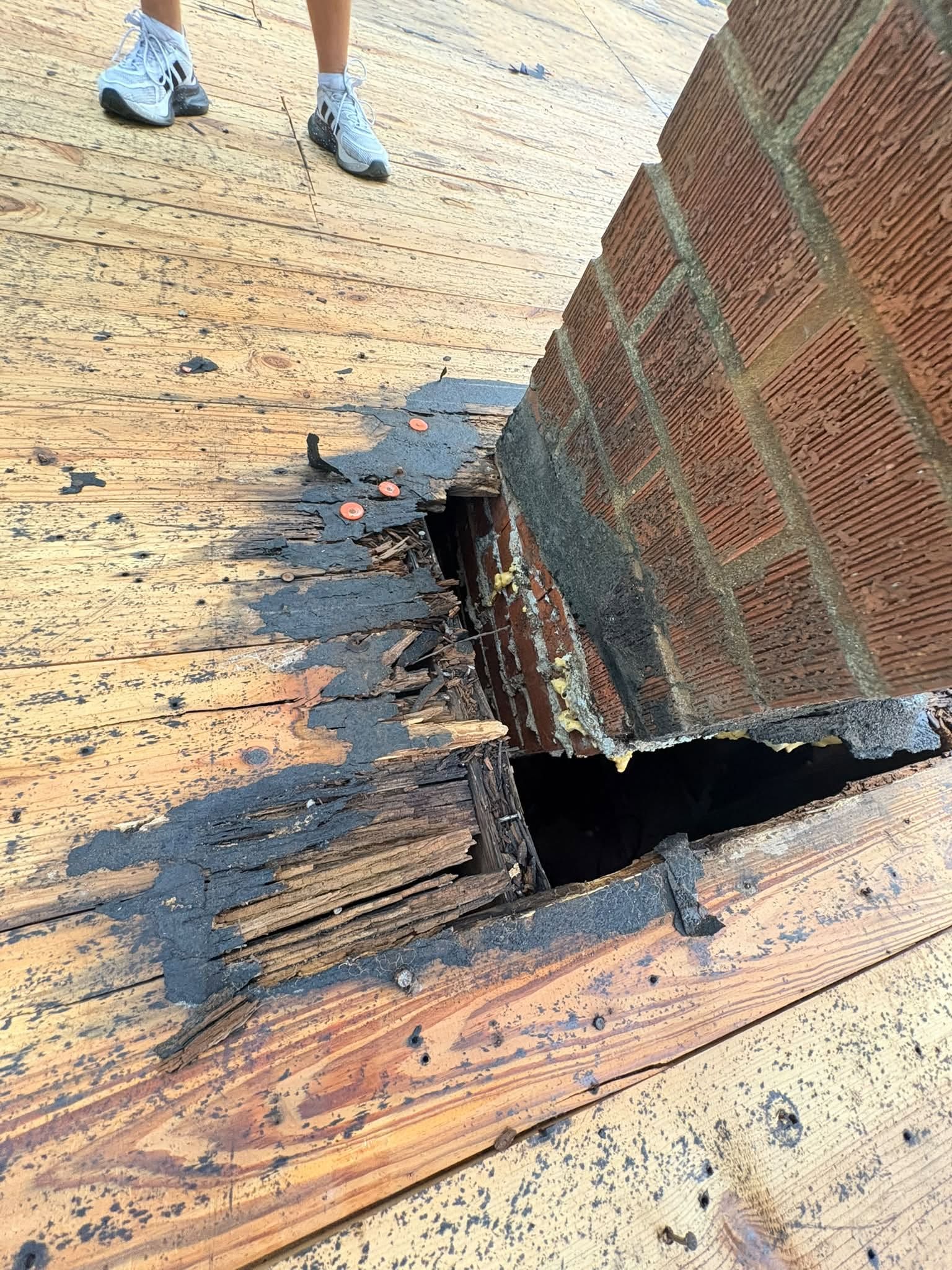
Bossier City's residential stock includes a significant share of homes built between the 1970s and early 2000s—an era when three-tab shingles over minimal underlayment were standard, and valley flashing was often installed without ice-and-water barrier beneath it. Those assemblies are now approaching or past their rated service life, and when high winds break flashing seals at valleys and penetrations, the resulting leaks move through underlayment that has already lost most of its protective properties. PRC Roofing repairs residential and commercial roofs in Bossier City, stopping active leaks at their actual source and probing decking for moisture rot that spreads beneath shingles before it becomes visible from inside the home.
Repair work begins with a full-system inspection rather than a visual check of the area where the interior damage appeared. Shingles are checked for hail bruising and granule loss, flashing seals at valleys and penetrations are probed, and a moisture probe is used to locate soft decking that does not yet show as a visible depression. Findings are documented with photos, which serves two purposes: it identifies exactly what needs repair and provides evidence for insurance claims when storm damage is the cause. Repairs address the source of leaks—failed flashing is restored, rotted decking is reinforced or replaced, and active entry points are sealed. A three-year labor warranty applies to all repair work, and PRC Roofing holds residential license RL 07966 and commercial license CL 09550.
Schedule a free storm damage inspection to identify exactly where your roof system is failing and receive a documented assessment before authorizing any repair work.
Why Small Leaks Become Structural Problems
A roof leak causing a ceiling stain has likely been present longer than the stain indicates. Water enters through a failed flashing seal or cracked shingle, moves through insulation and decking, and drips onto the ceiling below. By then, the decking absorbs moisture, the insulation loses its thermal value, and nearby framing may be at risk. Fixing the stain without locating the water entry point leaves the source and ongoing damage.
Once repairs are made, interior damage halts: no new ceiling stains appear, wall soft spots stabilize, and attic inspections show dry decking. PRC Roofing documents conditions before and after repairs, providing clear insurance records. Manufacturer certifications from Owens Corning, GAF, CertainTeed, and Malarkey apply to the materials used.
Not all damaged roofs need replacement. If the decking is sound and damage is limited to specific flashings or shingles, targeted repairs can extend the roof's life without the cost of a full tear-off. Inspections help determine the appropriate scope,
What Property Owners Ask About Roof Repair
The questions below address how storm damage repair is evaluated and performed—specifically the inspection method, the sequencing of repair decisions, and what changes once the work is done.
How does a moisture probe locate damaged decking that is not visible from the surface?
A moisture probe measures electrical resistance in the wood—wet wood conducts differently than dry wood, and the probe identifies elevated moisture content in specific sections of decking before those sections become soft enough to feel underfoot or show visible deflection. This matters on older Bossier City homes where OSB decking has been absorbing moisture slowly over multiple storm seasons without producing a visible ceiling stain yet.
Why do high winds cause flashing failures even when shingles appear undamaged?
Flashing seals at valleys, pipe penetrations, and roof-to-wall transitions rely on sealant bonds that become brittle over time. High wind creates uplift pressure that concentrates at these transitions, separating the sealant bond without lifting or cracking the surrounding shingles. The result is a leak source that looks intact from the ground and from a quick surface inspection.
What is the correct sequence for repairing a roof with both failed flashing and damaged shingles?
Flashing is repaired before shingles are replaced in the same section because new shingles installed over failed flashing will be lifted to re-do the flashing work if the sequence is reversed. Working from the structural components outward—decking, then flashing, then shingles—ensures that each layer is sound before the next one goes on top.
How does photo documentation during a repair inspection support an insurance claim in Bossier City?
Adjusters require evidence that damage is storm-related rather than the result of deferred maintenance. Photos taken during the inspection that show hail bruising location, flashing separation, and granule loss concentration give the adjuster specific, locatable evidence tied to the storm date. PRC Roofing & Construction provides this documentation as part of every storm damage inspection at no charge.
What does a correctly repaired flashing seal look like once the work is finished?
Restored flashing sits flat against both the roofing surface and the adjacent structure with no visible gap at the seam line, the sealant bead is uniform and does not show cracking or separation at the edges, and step flashing at wall-to-roof transitions overlaps correctly without exposed nail heads in the waterflow path.
PRC Roofing provides free storm damage inspections for properties in Bossier City—call (318) 768-3235 to have your roof assessed and documented before filing a claim or authorizing repairs. PRC Roofing also repairs roofs in Shreveport, Monroe, and Ruston.